
Posted in Advent

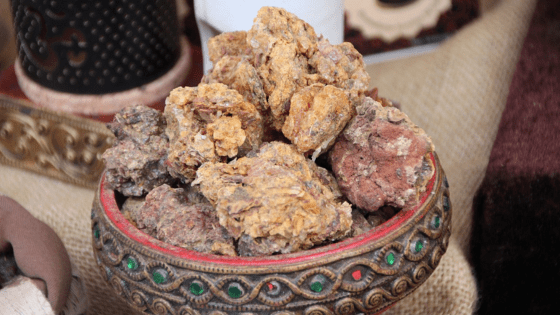
Advent Week 4: Myrrh and Death

Death is not something we like to think about at Christmas. I mean, Christmas is a time of celebration! We don’t want to celebrate death. In more liturgical settings, death might fit with the concept of Advent, but as Baptists, even if we mark the weeks of Advent, we would rather avoid the more mournful side of the anticipatory days. We prefer the joy. The worship. The royalty and majesty. Even so, death was the focus this week as we arrived at week four of Advent (you can watch the sermon here).

I’m one of those who prefers the joy. I like happy things. Mourning is hard. It hurts, and I’d rather avoid it. And yet, the more I ponder this week’s sermon and think about the myrrh offered up by the Magi, the more I realize how truly appropriate it is to contemplate, and yes perhaps even celebrate, death at Christmas.

Bear with me on this for a minute.

How many people do you know how are aching and grieving right now? I’m sure you can think of at least one person. But, if you’re anything like me, the faces and names running through your mind are probably more numerous than you’d care to admit. And, if you’re anything like me, you can probably recognize that death is present in every single aspect of that grief.

For some, it’s physical death. I ache with several dear and precious friends who are experiencing their first Christmas without loved ones. And they are not alone. We passed two funerals on a recent trip, and this morning I heard of two beloved mothers who lost their battle to disease in recent days.

For some, it’s the death of a relationship as marriages are crushed or friendships fall apart or children and parents suffer a rift between them. Others have had a life change of some sort that has resulted in the death of familiarity or normalcy. Illness, job loss, and other losses all communicate death.

As we focus on the life of Christmas, where do these dear, aching souls belong? How do they find a place in the celebration?

Right alongside the myrrh.

Jesus came to die. The manger is incomplete without the cross. And because we know the full story, we get to celebrate the truth of the cross alongside the beauty of a baby’s birth. And yes, it is something to celebrate.

Yet when we think of celebration, we often go straight from the manger to the empty tomb. Birth and resurrection. The happy things. We recognize that there is death between the two, but we want to think of that separately — hold it for Good Friday. In this case, though, that’s not really possible because the manger and the empty tomb are not complete without the cross. We have to include the reality of this death in our celebration. Fortunately, though, this is no ordinary death. This is a death that conquered death.

Even so, we still live in this world awaiting a final victory that will let us be fully and totally free of the impact of death. We still suffer the pain of death. But we can do so in a way that makes a place for mourning even during a time when we’d rather focus on celebration.

We can make space for those who mourn this Christmas by not ignoring the myrrh. By not overlooking the cross. By not pretending that everything is glorious and perfect, but by instead recognizing that we are still waiting. We’re waiting for perfection. For fulfillment. For death to finally be gone.

And we can wait with one another.

I don’t like to grieve. I don’t like to mourn. I want everything to be happy and peaceful and joyful. But, if acknowledging the reality of death this Christmas means that someone else has a place in the “celebration,” then I pray the Spirit will give me the wisdom to know how to do just that. That He will teach me how to treasure the gift of myrrh as greatly as I treasure the gold and frankincense. And that someone else will be drawn closer to Him and His love and His truth this year because of it.

Yes, at Christmas we can celebrate even death. Because it is the celebration of a death that conquered death once and for all. That is truly something worth celebrating.

Posted in Advent, Thoughts from Others

Advent Week 3: Frankincense for Remembering

Our Advent focus at church continues with the three gifts of Christmas, this week focusing on frankincense. The primary question brought up in this week’s sermon (which you can find here) connected the idea of worship and incense: what “smells” like worship in our lives?

Smell is a very powerful trigger. In an instant, a single odor can take us from joy to anxiety, from depression to comfort. Smell incites physical responses such as allergies or migraines. It triggers emotions. It prompts memories. It activates cravings. It provides warnings and feeds anticipation.

Some people are more sensitive to scents than others. I fall in the “more” category. Things like perfumes or tobacco of any sort can quickly trigger an allergic response or migraine — or both — for me. On the other hand, scents that don’t cause a negative impact can fill me with excitement!

I don’t know that I ever tire of the smell of cinnamon. It’s comfort and health and pleasure and joy and so many other emotions I can’t even name.
The smell of rain after a dry spell is a lifelong treasure.
The smell of snow always makes me smile.
The smell of meat cooking, of a wood fire, of leather, of a new book…

I could go on and on.

As I think about the power of smells and ponder the question of what “smells” like worship in my life, I realize that the things I do — and even my very presence — can have as strong of an impact on others as certain smells.

I’ve always wanted to have a positive impact on people, to be considered a positive presence in their lives. But, I’ve always wrestled with the feeling that I’m the opposite. Growing up, I believed that others didn’t truly like being around me. They just felt obligated for one reason or another (I could always come up with a reason), and if they were left to their preferences, I wouldn’t be wanted. While I do know that was true in some situations, much of that revolved around my own insecurities, and those insecurities have persisted into adulthood.

But as I ponder this question more, I realize that the anxiety I felt about other people stemmed from the fact that my approach was wrong. I am not here to have a positive impact on people. I’m here for one reason and one reason only: to point others to Jesus. That’s it.

The “smell” of my presence in this world should be the “smell” of Jesus.

I know for a fact that I don’t do that well. I’m a perfectionist, and so my “smell” is often that of making sure all of the details line up. My “smell” too frequently makes others feel that they don’t measure up, despite the fact that I’m the one who feels inadequate in most situations. My “smell” is caught up in the here and now. In the details. In things being “right.”

While in some situations the details are important, they are always secondary to Jesus. Always. And that’s what my life should reflect.

I should radiate worship. The love of Christ. The joy of His presence. The comfort of His grace. The power of His forgiveness. The reality of His pure judgment (and never mine!) that is so entwined with everlasting, unfailing love that the two can never be separated. Those things are the smell of worship. The smell of Christ Jesus.

To be honest, I’m not overly enamored by the smell of frankincense. It’s not bad. It doesn’t cause a migraine or trigger my allergies or incite negative emotions. It’s just not a favorite smell. But, I love the idea that, in Old Testament texts, it’s shown as the smell of worship. It was included in almost every worship-based sacrifice, as well as being part of the unique incense blend laid out by God for use in the tabernacle. When the Israelites smelled frankincense, they would think of worship. Every time.

That’s how I want to live my life, as a person who makes others think of worship. Of the presence of Christ. But how do I get there?

By establishing my own reminders to focus on worship throughout each day. The smell of frankincense might not do the trick for me as it did for the Israelites, but there are many other things that can remind me. My job is to let those triggers do their work. To not be numb to them, as we can often become numb to certain sights and smells. To actively respond in worship whenever I encounter the reminders.

I can only draw others to Christ when I am faithfully focusing on Him myself.

Lord, make me like frankincense!

Posted in Advent, Thoughts from Scripture

Advent Week 2: Gold for a King

We are in the second week of Advent, and our theme at church on Sunday was gold, representing the kingship of Jesus.

We love to focus on Baby Jesus at Christmas. On His vulnerability and all that He surrendered to take on our flesh and walk among us. And we need to remember all that He surrendered. All that He sacrificed. All that He willingly released to humble Himself and come to us. Philippians 2 reminds us of the reason why we need to remember Jesus and His humble entrance into our world: we are to live with the same humility that He showed.

But, in focusing on Him as Baby, we sometimes make the mistake of thinking that He came the first time as just a Baby, and that His presence as King will be for next time.

The presence of the Magi in Matthew 2 tells a different story. They brought Him gold and welcomed Him as the born King of the Jews. He’s always been King, from before creation. His birth and time on earth didn’t change that. Baby Jesus was still King.

That was the thrust of Sunday’s sermon (which you can find here). It was nothing new to me. Yet it seems that I have to frequently revisit my own response to this truth. And what I’ve seen of my heart this week has been rather convicting.

As a society, what is our response to “important” people? Whether it’s a ruler or a celebrity, what is our collective dream? Is it not to be seen by them? We get all excited when we get to meet a famous person or when we find out stories about how good or kind they were in a specific situation. We love to see what they give to us.

When it comes to Jesus, He gave everything. He surrendered His glory and entered our pain-filled world so He could walk with us. It is good and right to see what He’s done for us. But, how often do we let that be our primary focus? How He sees us? What He can do for us?

I’ve been struck by several Messianic passages I’ve read lately that discus what it looks like to welcome a King. It’s not just about what He chose to do for us. It’s about how we choose to receive Him.

Psalm 24 reveals the extreme challenge it is for a person to ascend the hill of the Lord. Who among us truly has clean hands, pure hearts, and the sincerity reflected here? None of us, without the righteousness of Jesus! But then, there’s the second half of the song, the half that shows the King coming to us. Remedying the situation by coming to those who seek Him but can’t get to Him on their own.

There’s only one catch: the city has to prepare itself for the coming of the King. The gates have to be lifted to make room! They must be flung open! Work has to be done to welcome in the King of glory!

We see it in Isaiah 40 as well, when the prophet speaks of preparing the way of the Lord by lifting the valleys and leveling the mountains, building a straight highway for the King.

Obviously, none of this is about making the earth a perfect place before Jesus arrives as King. It definitely didn’t happen before His birth! The world was a mess then, and it continues to be a mess now.

But, as I read these passages, I am convicted about the way I approach Him. The way I welcome Him. Yes, I need to celebrate and rejoice in what He has done for me. For us. For this whole world full of people He intimately loves! But, oh how I need to also acknowledge that He is King and I am His subject! I need my focus to be on what it looks like to welcome His presence. After all, He said He would be with us always, even to the end of the age, according to Matthew 28:20. He’s here with me today.

His Kingdom is here, right now. Am I living in it well?
He is returning to claim full victory. Am I doing all I can to prepare for that day?

May I learn to lay my gold before the Lord, day after day after day, focusing my attention and my work on daily recognizing Him as King and choosing to live my life as His beloved subject.