Posted in Faith Nuggets, Thoughts, Thoughts from Scripture

Obedience of the Small

Some days I reread my old posts and wonder what I was thinking. Other times, I am encouraged by remembering what God has taught me in the past. This is one of those encouraging lessons.

During my time in the religion department at Ouachita Baptist University, I had the privilege of taking a biblical interpretation course. Dr. Hays taught us to take a passage and see its layers. Simply by reading, reading again, and reading yet again, he showed us how new details could stand out to us even when we thought we had exhausted every avenue of thought in a verse or passage.

Noticing Details

I have not always exercised that developed eye for details, keeping it in shape to see the depths Dr. Hays taught us to see. Even so, there are times when things jump out at me because I have learned to take a second, third, and fourth look at passages.

Take this verse, for instance:

So they established a decree to circulate a proclamation throughout all Israel from Beersheba even to Dan, that they should come to celebrate the Passover to the Lord God of Israel at Jerusalem. For they had not celebrated it in great numbers as it was prescribed. 2 Chronicles 30:5

This passage rests in the middle of the story of Hezekiah’s reforms. As one of the few “good” kings of Judah, Hezekiah had decided that it was time for the kingdom to return to serving and worshiping God in holiness and purity. In 2 Chronicles 29, we see Hezekiah prodding the less-than-enthusiastic priests and Levites and motivating the people to cleanse their hearts in repentance and worship. It takes a bit of work, but finally we get to the point where the people have been purified, and they are ready to celebrate a nation-wide Passover for the first time in many generations.

So, what stands out to me here? The very end of the verse. “For they had not celebrated it in great numbers as it was prescribed.” (emphasis mine)

Do you know what that indicates?

Some still celebrated.

Celebration of the Few

The temple had been in various states of disrepair over the decades, and many years passed with priests completely unable to perform their duties. Yet it seems that some people possibly still faithfully celebrated the Passover.

If this is true, how must it have felt year after year for those few? They were being faithful. They were being obedient. Yet I cannot help but think that some of them must have longed for something they had never experienced – a Passover like God’s people held in the very beginning. A Passover with the whole community. A Passover in great numbers.

But they did not let those longings keep them from obedience. They persevered. They celebrated. They worshiped. They persisted in obedience. Even when the great numbers focused their attention and energy elsewhere.

We have no details showing us how life was for the small numbers who continued in worship. There is no story chronicling their faithfulness, other than the recognition that prophets still existed and the Word of God was still being proclaimed, even if to mostly deaf ears. But the normal everyday faithful aren’t really even hinted at until this moment, and even here it is just a passing statement that only infers their existence.

What About Us?

It is not glorious to obey in small numbers. In fact, it is just the opposite. It is lonely. It is challenging. It goes unnoticed.

But it is worth it.

Are your numbers small right now? Obey anyway. Do you feel isolated? Stand strong anyway. Is obedience challenging? Obey anyway.

The world may never notice. History may never record your perseverance. But it is worth it. Keep going! The day will come when the great numbers will join you. And I guarantee your joy will be complete in that day!


Posted in Thoughts from Books, Thoughts from Scripture

Questions and Answers

I recently reread a fiction series that has long been a favorite of my entire family. It’s called The Staff and the Sword, written by Patrick W. Carr.

I can still remember the first time I read the series. By the end of the first book I had more questions than answers. Of course, so did most of the characters. The second book clarified some things, but the third book…exploded. Preconceptions were challenged. Mental horizons were forced to expand. Traditions were shattered. But in the process, pieces of the puzzle began to fall into place.

The series is deep enough that I see new things every time I read it. But there is one bold and vivid concept that gets me every time I read the series: The question frames the answer. Without giving too much away (because it’s a series worth reading and I don’t want to spoil it for you if you decide to pick it up), bear with me a bit while I give some very basic context.

In the series, a group of characters known as readers are responsible for gleaning the will of God through the process of casting lots. This process involves holding a question and a potential answer firmly in mind while carving a perfectly round lot out of wood or stone.

The reader can then move on to create a lot with another possible answer to the same question, again holding both the question and answer firmly in mind. There’s a catch, though. The answers have to be somewhat known to the reader casting the lots. For instance, imagine casting lots to determine a destination. Should you go to this location or that one? The reader must know those destinations personally, or must have a solid enough description of them to picture them vividly and accurately while casting. That limits the cast a bit, does it not?

Early in the narrative, that seems to be the main catch. But, that pesky line keeps popping up through the course of the entire series, hinting that there’s more to contend with. The question frames the answer. Ultimately, this ends up being pivotal for the plot. But, with this reread of the series, I’ve gotten the uneasy feeling that this very concept is relevant to real life as well.

Most especially to our prayer life. Our own avenue to seeking and understanding the will of God.

I’ve always been one who likes checklists and step-by-step instructions. I like to do things the “right” way. In a way, this fictional depiction of casting lots appeals to me. There’s a right way to cast. Readers have an inherent capability that they are born with, but then they spend years studying both the history and mechanics of their craft, learning how to cast properly. It’s a factual process, with guidelines and rules to follow.

But, as the story progresses, it becomes evident that there is much more to the craft than simply doing it “right.” And that translates well into our prayers lives. As we pray, there is a need for understanding. A need to grasp the nature of the God we are seeking to communicate with. When Jesus says, “Ask and you will receive,” it’s in the middle of a whole lengthy discourse on the nature of thinking beyond our rules and regulations. It’s a discussion of understanding the heart of the Father we serve. Understanding His purpose behind the rules and instructions. Asking in prayer for guidance based on His character.

And our prayerful questions, both the specific words and the nature behind the asking, reveal greatly whether or not we know His character. Whether or not we are in tune enough to receive the answer. Because the answer to our questioning is very often something beyond our knowledge and understanding. It is something that may even be beyond our imagination. The answer is not just a direction about what to do or where to go next, it is a deeper understanding of the God we serve.

That’s more than a little uncomfortable, whether you are someone like me who loves the tangible or you’re someone who has an imaginative mind. God’s answers go beyond both. And He wants to teach us how to ask the questions that will reveal those powerful answers.

It’s an overwhelming path to follow, but I want to go. I want to follow the path that will teach me to better frame the question. The path that will help me seek answers beyond my limited understanding. The path that will draw me closer to communing with and knowing Almighty God. Will you come with me?

Posted in Thoughts from Life, What I'm Learning

Celebrating

I’m struggling today.

I had a post started, sharing thoughts about something I’d read this morning, but it fell flat. I need to ponder it more, work with it more, figure out how it fits into my life and thoughts and intentions…and actions.

And, to be honest, there’s a bit of melancholy resting on me today. January 1 is just a day on a calendar. We have to rotate it through sometime. Why not today? Throughout history, cultures have always chosen a day to do celebrate the start of a new year. Of a new rotation of opportunity and experience and existence. And celebration is so important. God Himself ordained times of celebration, including a new year celebration, as He set up the structure for the nation of Israel. Celebration is good and helpful.

Yet sometimes it really does just fall flat. Sometimes it really does just feel like it’s an arbitrary day on the calendar, especially after the hard years we’ve walked through lately, one after another.

Sometimes the desire to celebrate is there. But the means to do so? Those aren’t as readily available.

So, we struggle.

I’ll be honest, I don’t want to struggle through 2025. I know there will be ups and downs. There will be sweet times and very hard times. I know this, not because I’m expecting a repeat of the last six years (remember how many people were so ready to be done with 2019 and were fully convinced that 2020 would be better?) but because we live in the real world. There will be births and deaths, joys and heartaches, beginnings and endings.

For the past six years, though, the hard has weighed me down heavily. The negative has made it a challenge to truly celebrate the positive.

So, for this year, I want to learn to celebrate purely. Not to ignore the reality of the negative. Not to shove down the weeping and mourning that will inevitably come. Not to deny the fact that life can be so very hard sometimes. But to decide that I won’t allow those things to keep me from celebrating the good. Because there is good. There’s been good every single year. If I’ve missed it, it’s because I’ve been so focused on the bad. That’s the easy route, to be honest. I want to accept the more challenging route. I want to be able to walk in the bad while still being constantly ready to celebrate the good — even in those instances when the two are walking hand in hand.

I’m struggling today, and I know I’ll struggle many more times in 2025. But I’m also determined to relearn how to celebrate. I’m determined to make that more of my focus than the struggle. Because this life of following Christ and seeing His work in the world around me is worth celebrating.

Posted in Thoughts from Life

Today’s Pieces

I love puzzles. Fortunately, I have a child who also loves puzzles, and usually during school breaks we keep one going that we can add a few pieces to as we have time.

Our preference is large puzzles with some measure of complexity. Although we have a few 500-pieces options that are beloved because of the completed images, our preference is 1000 pieces. We do occasionally tackle even larger ones, like the 4000-piece world map that we assembled and then framed for display. It took us a while to get that one done, but we absolutely love the finished product!

This year, though, we discovered something new: Christmas countdown puzzles. The puzzle pieces are presorted into 25 numbered boxes, each box containing around 40 puzzle pieces. Each day, we pulled out the appropriately numbered box and assembled only the pieces for that day.

Honestly, as fun as the countdown puzzles were, they were not incredibly challenging. We could complete the day’s section in a matter of minutes and quite easily since we knew that all of the pieces fit into a compact section. (Although, to be honest, we both got behind on our puzzles, so we rarely had a one-box-only day.) In that regard, this approach is not one we’d want to do very often. We like the challenge of a large puzzle with lots of shapes and colors.

On the other hand, though, the countdown puzzles have offered an illustrative reminder about life — a reminder I really need right now as we pass through the Christmas season and approach a new year.

You see, my brain often attacks life as if I have to try to figure out a huge puzzle. I see a huge pile of random pieces, including edge pieces that create a frame or border, and feel that I have to dive in and solve it. This urge is especially strong in times such as the transition into a new season, whether it’s a new calendar year, a new school year, or a new phase of life.

But, life — especially life as a Christian — is much more like that countdown puzzle. There is a Designer who already has the whole picture in hand. He knows exactly where each puzzle piece goes. He knows how the frame works, and He knows that I don’t even need the whole frame to figure out the puzzle. I just need to focus on what He’s given me for today.

Today, I have my set of pieces. Today I have my small focused space. Today I have my allotment of wisdom and understanding. Today I have all I need to accomplish the portion of the puzzle that needs to be completed — the portion that attaches directly to all I have already done throughout my life.

I just need to focus on the “box” handed to me today.

I’d rather have it all figured out. I’d rather have the big picture and be able to rush to completion. Not necessarily of all of life, but at least of this upcoming year or season.

I know better. I know life should be lived out each day and the path my loving Father has set me on should be cherished and lived abundantly. Yet I still try to tackle the whole and jump ahead to the box I’ll need for tomorrow or next week or even five years from now.

God slows me down and hands me what I need for today. He reminds me that He holds the fullness of my life and that He already has in place what I’ll need for tomorrow or next week or five years from now. He’s holding it safely. And between now and then, He’s giving me what I need so that when I get to those future pieces, I’ll have a place to put them. I’ll know where they fit.

I’m tempted to dump out the whole puzzle and try to figure it out on my own. He’s gently reminding me that He sorted the pieces for a reason, and that I can trust Him with them all.

Now that Christmas is past, we’ll probably pull out another big puzzle and enjoy the challenge of it before my daughter heads back to school. But as I put away the countdown puzzles, I’m thankful for the reminder God gave me each time I opened one of these small boxes. I’m thankful that when I do go back to the big puzzles, even they will help me remember.

And I’ll be thankful for everything that God has given me to be a part of His will and plan for today.

Posted in Thoughts from Life

Sausage Balls & the Work of God

It’s sausage ball season!

I know that, technically, sausage balls aren’t limited to fall or holidays. But somehow in my family’s mind, they just fit in this time of year. We rarely, if ever, make sausage balls in the summer, and we know autumn is officially here when we’ve made our first batch sometime in September or October!

I’ve enjoyed sausage balls all my life, but I didn’t make my first batch until after I got married. My mother-in-law always made some for my husband to collect when he visited home, but since we lived about eight hours away, those visits could be rare.

Sausage balls aren’t hard to make at all. They are just three ingredients — Bisquick, ground sausage, and shredded cheese (although we’ve learned that adding in some blackened seasoning makes them even yummier!) — all dumped into a bowl and mixed. The kicker is that it takes a bit to get the ingredients all mixed together because there’s no moisture added other than the moisture in the ground sausage.

When I first started making sausage balls over two decades ago, I didn’t think it was possible to get all of the cheese and Bisquick mixed in. There was just no way to make it happen. The sausage just didn’t hold enough moisture, no matter how much I worked the dough.

But then I got a stand mixer, and all of my baking endeavors were revolutionized. I quickly became addicted to the thing, wondering how in the world I’d ever mixed doughs without it.

The first time I used the stand mixer to mix up sausage ball dough, I was amazed at how easily the ingredients melded together. Even so, it still took a couple more years before I realized that I really could get it all mixed, leaving no remnants of cheese or Bisquick.

I know better now. I know to keep mixing. Let it go just a little longer. Watch for all of the powder and cheese to be absorbed into the ball of dough. I know it will happen if I just wait long enough.

Every time I mix up a batch, though, I still doubt. Several times this season, I have gathered all of the ingredients and dumped them into the mixing bowl, and each time I was still tempted to add a splash of water (not something I do, but I’m always tempted!). The day was dry. The sausage was extra lean. I doubted that this time it would all mix in. I just knew it needed a little help.

But I managed to resist temptation and just let the mixer work its magic. Lo and behold, it all mixed in beautifully and worked well. No issues. No remnants. Just excellently blended dough, ready to be shaped and baked up into balls of goodness.

I often view life the same way.

There are some situations that just need miracles. Huge intervention that nothing on earth can help. And I know that the God I serve, the Father who claims me as His beloved child, can accomplish those miracles.

But more of life is like an unmixed bowl of sausage ball ingredients. It’s all there. And somewhere deep inside, I know that God has provided every ingredient and circumstance needed to make it all work.

But I doubt.

I convince myself that there will be remnants. Little things left incomplete. Imperfections. Minor disappointments in an otherwise good thing. And I think I need to jump in and help. Add a little of this or that to the mix to make sure it all works right.

And my little bit of this or that acts a lot like adding water to a sausage ball mix. It knocks the balance off. Maybe just a bit, maybe a lot. But the end result is not right.

Everything I feared would happen without my intervention actually does happen because of my intervention. Because I didn’t have patience to let God work. To be enough in tune with him to act when He said act and to wait when He said wait. To trust that just because it doesn’t look like it’s going to work doesn’t mean that it won’t.

I have come to discover and learn that God’s greatest works aren’t in His huge and dramatic miracles, although those are fun to see.

His greatest works are in those times when He convinces His children to trust Him and His processes. When He helps us not add in our little bits of this and that. When He takes something that doesn’t look like it’s going to work and makes it work, smoothly and naturally, simply because it’s given enough time.

I’m not always faithful to be obedient in those times. But I want to be. I want to have the patience with life that I’ve learned to have with mixing sausage ball dough. And I pray He’ll remind me of that truth with every single batch I make.

Posted in Advent

Advent Week 4: Myrrh and Death

Death is not something we like to think about at Christmas. I mean, Christmas is a time of celebration! We don’t want to celebrate death. In more liturgical settings, death might fit with the concept of Advent, but as Baptists, even if we mark the weeks of Advent, we would rather avoid the more mournful side of the anticipatory days. We prefer the joy. The worship. The royalty and majesty. Even so, death was the focus this week as we arrived at week four of Advent (you can watch the sermon here).

I’m one of those who prefers the joy. I like happy things. Mourning is hard. It hurts, and I’d rather avoid it. And yet, the more I ponder this week’s sermon and think about the myrrh offered up by the Magi, the more I realize how truly appropriate it is to contemplate, and yes perhaps even celebrate, death at Christmas.

Bear with me on this for a minute.

How many people do you know how are aching and grieving right now? I’m sure you can think of at least one person. But, if you’re anything like me, the faces and names running through your mind are probably more numerous than you’d care to admit. And, if you’re anything like me, you can probably recognize that death is present in every single aspect of that grief.

For some, it’s physical death. I ache with several dear and precious friends who are experiencing their first Christmas without loved ones. And they are not alone. We passed two funerals on a recent trip, and this morning I heard of two beloved mothers who lost their battle to disease in recent days.

For some, it’s the death of a relationship as marriages are crushed or friendships fall apart or children and parents suffer a rift between them. Others have had a life change of some sort that has resulted in the death of familiarity or normalcy. Illness, job loss, and other losses all communicate death.

As we focus on the life of Christmas, where do these dear, aching souls belong? How do they find a place in the celebration?

Right alongside the myrrh.

Jesus came to die. The manger is incomplete without the cross. And because we know the full story, we get to celebrate the truth of the cross alongside the beauty of a baby’s birth. And yes, it is something to celebrate.

Yet when we think of celebration, we often go straight from the manger to the empty tomb. Birth and resurrection. The happy things. We recognize that there is death between the two, but we want to think of that separately — hold it for Good Friday. In this case, though, that’s not really possible because the manger and the empty tomb are not complete without the cross. We have to include the reality of this death in our celebration. Fortunately, though, this is no ordinary death. This is a death that conquered death.

Even so, we still live in this world awaiting a final victory that will let us be fully and totally free of the impact of death. We still suffer the pain of death. But we can do so in a way that makes a place for mourning even during a time when we’d rather focus on celebration.

We can make space for those who mourn this Christmas by not ignoring the myrrh. By not overlooking the cross. By not pretending that everything is glorious and perfect, but by instead recognizing that we are still waiting. We’re waiting for perfection. For fulfillment. For death to finally be gone.

And we can wait with one another.

I don’t like to grieve. I don’t like to mourn. I want everything to be happy and peaceful and joyful. But, if acknowledging the reality of death this Christmas means that someone else has a place in the “celebration,” then I pray the Spirit will give me the wisdom to know how to do just that. That He will teach me how to treasure the gift of myrrh as greatly as I treasure the gold and frankincense. And that someone else will be drawn closer to Him and His love and His truth this year because of it.

Yes, at Christmas we can celebrate even death. Because it is the celebration of a death that conquered death once and for all. That is truly something worth celebrating.

Posted in Faith Nuggets, Thoughts, Thoughts from Life

Total Rest

It’s not quite the new year yet, but this wrap-up of the rest series felt like a good reminder even now, while we remain in the busy season. 

A new year has arrived, bringing with it a slower pace of life. But to get here, I had to survive a typical fall in the Hibbard household. Every year the stretch between the end of October through the end of December is a very busy time for us. This year was no exception.

But right in the middle of the busyness, God reinforced His lesson on rest. Oh, He had already given me the idea. I had even journaled it months before. But, it wasn’t until I had come to the end of a very rough week that He reminded me of one more truth He had taught me about rest.

Rest is not just relational, expected, and sacrificial. Rest is also total trust.

In all honesty, I had been trying to rest in the midst of the chaos. But, I did it my way. I allotted time to attend Christmas parties and enjoy the fellowship. I sacrificially set aside my to-do list on multiple occasions, supposedly in the name of rest. But I forgot that all of these things must be bound together by a conscious focus on total obedience.

You see, rest is not just about coming up with ways to interact with others, to meet an expectation, or to sacrifice when an opportunity seems to arise. Rest is about walking in complete trust and obedience, allowing God to handle every single detail, every single time.

When I tried to do life, whether work or rest, my way, I fell apart. I failed. My to-do list backed up and my relationships became strained. I neglected to fulfill obligations, and no amount of time set aside for rest seemed to rejuvenate me.

I did not find real rest again until I stepped back to see how I had failed to trust and obey the Lord. Rest returned only when I actively and consciously began to walk once again in total surrender.

Now we face a new year. If it moves even half as quickly as last year did, many of us will once again come to the end of it feeling harried and tired. But God offers the rest we need to make this a year of complete abandon to Him. Complete obedience. Complete trust. And complete rest.

I am not one for New Year’s resolutions, but I do hunger to make a new commitment this year. I hunger to live this year centered in the total rest of Christ.

Will you join me?

Here is the final post in my four-part Rest series, originally published in Arkansas Baptist News.

Posted in Advent, Thoughts from Others

Advent Week 3: Frankincense for Remembering

Our Advent focus at church continues with the three gifts of Christmas, this week focusing on frankincense. The primary question brought up in this week’s sermon (which you can find here) connected the idea of worship and incense: what “smells” like worship in our lives?

Smell is a very powerful trigger. In an instant, a single odor can take us from joy to anxiety, from depression to comfort. Smell incites physical responses such as allergies or migraines. It triggers emotions. It prompts memories. It activates cravings. It provides warnings and feeds anticipation.

Some people are more sensitive to scents than others. I fall in the “more” category. Things like perfumes or tobacco of any sort can quickly trigger an allergic response or migraine — or both — for me. On the other hand, scents that don’t cause a negative impact can fill me with excitement!

I don’t know that I ever tire of the smell of cinnamon. It’s comfort and health and pleasure and joy and so many other emotions I can’t even name.
The smell of rain after a dry spell is a lifelong treasure.
The smell of snow always makes me smile.
The smell of meat cooking, of a wood fire, of leather, of a new book…

I could go on and on.

As I think about the power of smells and ponder the question of what “smells” like worship in my life, I realize that the things I do — and even my very presence — can have as strong of an impact on others as certain smells.

I’ve always wanted to have a positive impact on people, to be considered a positive presence in their lives. But, I’ve always wrestled with the feeling that I’m the opposite. Growing up, I believed that others didn’t truly like being around me. They just felt obligated for one reason or another (I could always come up with a reason), and if they were left to their preferences, I wouldn’t be wanted. While I do know that was true in some situations, much of that revolved around my own insecurities, and those insecurities have persisted into adulthood.

But as I ponder this question more, I realize that the anxiety I felt about other people stemmed from the fact that my approach was wrong. I am not here to have a positive impact on people. I’m here for one reason and one reason only: to point others to Jesus. That’s it.

The “smell” of my presence in this world should be the “smell” of Jesus.

I know for a fact that I don’t do that well. I’m a perfectionist, and so my “smell” is often that of making sure all of the details line up. My “smell” too frequently makes others feel that they don’t measure up, despite the fact that I’m the one who feels inadequate in most situations. My “smell” is caught up in the here and now. In the details. In things being “right.”

While in some situations the details are important, they are always secondary to Jesus. Always. And that’s what my life should reflect.

I should radiate worship. The love of Christ. The joy of His presence. The comfort of His grace. The power of His forgiveness. The reality of His pure judgment (and never mine!) that is so entwined with everlasting, unfailing love that the two can never be separated. Those things are the smell of worship. The smell of Christ Jesus.

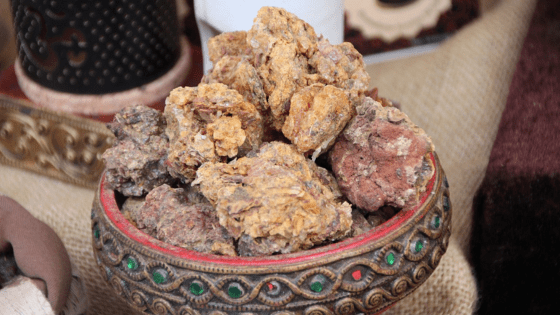
To be honest, I’m not overly enamored by the smell of frankincense. It’s not bad. It doesn’t cause a migraine or trigger my allergies or incite negative emotions. It’s just not a favorite smell. But, I love the idea that, in Old Testament texts, it’s shown as the smell of worship. It was included in almost every worship-based sacrifice, as well as being part of the unique incense blend laid out by God for use in the tabernacle. When the Israelites smelled frankincense, they would think of worship. Every time.

That’s how I want to live my life, as a person who makes others think of worship. Of the presence of Christ. But how do I get there?

By establishing my own reminders to focus on worship throughout each day. The smell of frankincense might not do the trick for me as it did for the Israelites, but there are many other things that can remind me. My job is to let those triggers do their work. To not be numb to them, as we can often become numb to certain sights and smells. To actively respond in worship whenever I encounter the reminders.

I can only draw others to Christ when I am faithfully focusing on Him myself.

Lord, make me like frankincense!

Posted in Faith Nuggets, Thoughts, Thoughts from Others, Thoughts from Scripture

Sacrificial Rest

 Such a timely reminder, as we are, once again, deep into the holiday season and all of the interactions it can bring!

The holiday season is upon us! As an introverted homebody, sometimes the busyness of this season throws me for a loop. I do love it. I love the decorations and the celebrations. I enjoy the parties and the events, even if I sometimes have to pry myself out of the warm house to attend them.

But I also need rest. And I am not quite sure I like the next lesson God has been teaching me about rest. You see, in addition to learning that rest is relational and expected, I am also learning that rest is sacrificial.

I have always been pretty selfish about rest. My opinion has always been that I need it, and I need it my way or it doesn’t count. But when my husband and I had a conversation about a couple of passages of Scripture, I found my selfishness challenged.

In Acts 16:13, we see Paul heading down to the riverside in hopes of meeting people gathered there to pray. I have never though much about that action until Doug made a thought-provoking observation. He pointed out that Paul’s trip outside the city on the Sabbath was a sacrificial act. It was outside his norm. It was outside the parameters of rest he had been taught during his formative years.

Paul made a sacrifice.

So, where was he when he made this sacrifice? He was in Philippi. He was making the contacts that would eventually result in the Philippian church. The same Philippian church that brought him incredible joy, according to verses like Philippians 1:3. In fact, it could be argued from Scripture that this particular church provided Paul’s greatest source of strength and encouragement.

But it all started with a sacrifice.

One of my favorite verses is Hebrews 3:13.

But encourage each other daily, while it is still called today, so that none of you is hardened by sin’s deception. (CSB)

I have always loved the idea of encouragement among believers. But, as I look at Paul’s sacrificial investment in the Philippian church – and the return it brought – I see Hebrews 3:13 in a new light. I see that we receive our greatest encouragement, strength, and support when we are willing to sacrifice for one another, even in rest.

Now, sacrificial rest does require care because it still must be rest. It cannot become just another source of busyness. But, what would happen if we were willing to put aside our selfish conceptions of rest and determine instead to rest in fellowship with our fellow believers?

As the busy schedule presses in, I pray God will show me exactly how to rest sacrificially – and that He will allow even my rest to bear the fruit of joy and encouragement for others.

This is part three of the Rest series, originally published in Arkansas Baptist News.

Posted in Advent, Thoughts from Scripture

Advent Week 2: Gold for a King

We are in the second week of Advent, and our theme at church on Sunday was gold, representing the kingship of Jesus.

We love to focus on Baby Jesus at Christmas. On His vulnerability and all that He surrendered to take on our flesh and walk among us. And we need to remember all that He surrendered. All that He sacrificed. All that He willingly released to humble Himself and come to us. Philippians 2 reminds us of the reason why we need to remember Jesus and His humble entrance into our world: we are to live with the same humility that He showed.

But, in focusing on Him as Baby, we sometimes make the mistake of thinking that He came the first time as just a Baby, and that His presence as King will be for next time.

The presence of the Magi in Matthew 2 tells a different story. They brought Him gold and welcomed Him as the born King of the Jews. He’s always been King, from before creation. His birth and time on earth didn’t change that. Baby Jesus was still King.

That was the thrust of Sunday’s sermon (which you can find here). It was nothing new to me. Yet it seems that I have to frequently revisit my own response to this truth. And what I’ve seen of my heart this week has been rather convicting.

As a society, what is our response to “important” people? Whether it’s a ruler or a celebrity, what is our collective dream? Is it not to be seen by them? We get all excited when we get to meet a famous person or when we find out stories about how good or kind they were in a specific situation. We love to see what they give to us.

When it comes to Jesus, He gave everything. He surrendered His glory and entered our pain-filled world so He could walk with us. It is good and right to see what He’s done for us. But, how often do we let that be our primary focus? How He sees us? What He can do for us?

I’ve been struck by several Messianic passages I’ve read lately that discus what it looks like to welcome a King. It’s not just about what He chose to do for us. It’s about how we choose to receive Him.

Psalm 24 reveals the extreme challenge it is for a person to ascend the hill of the Lord. Who among us truly has clean hands, pure hearts, and the sincerity reflected here? None of us, without the righteousness of Jesus! But then, there’s the second half of the song, the half that shows the King coming to us. Remedying the situation by coming to those who seek Him but can’t get to Him on their own.

There’s only one catch: the city has to prepare itself for the coming of the King. The gates have to be lifted to make room! They must be flung open! Work has to be done to welcome in the King of glory!

We see it in Isaiah 40 as well, when the prophet speaks of preparing the way of the Lord by lifting the valleys and leveling the mountains, building a straight highway for the King.

Obviously, none of this is about making the earth a perfect place before Jesus arrives as King. It definitely didn’t happen before His birth! The world was a mess then, and it continues to be a mess now.

But, as I read these passages, I am convicted about the way I approach Him. The way I welcome Him. Yes, I need to celebrate and rejoice in what He has done for me. For us. For this whole world full of people He intimately loves! But, oh how I need to also acknowledge that He is King and I am His subject! I need my focus to be on what it looks like to welcome His presence. After all, He said He would be with us always, even to the end of the age, according to Matthew 28:20. He’s here with me today.

His Kingdom is here, right now. Am I living in it well?
He is returning to claim full victory. Am I doing all I can to prepare for that day?

May I learn to lay my gold before the Lord, day after day after day, focusing my attention and my work on daily recognizing Him as King and choosing to live my life as His beloved subject.