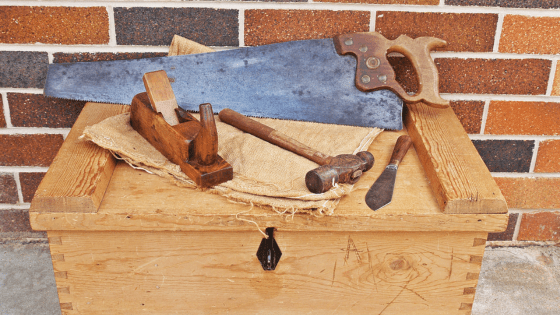
Posted in Tool Box

The Tool for All Tool Boxes

I must admit to a bit of a chuckle as I start this thought.

I don’t know of a single person who likes to be called a “tool” or relegated to the idea of simply being a resource or a useful thing.

And yet, when it comes to building tool boxes to fit current needs or prepare for something we desire to do — any hobby, habit, journey, adventure, activity, job, task, or any other noun we can think of — the people around us truly are our greatest resource. If we have nothing else, we should grab onto people!

First, people provide real experience.

Even if we’re trailblazing and doing something no one else has technically ever done before, we’re blazing those trails because of the experience of people who have accomplished much before us. They’ve laid groundwork, created the resources we use, or simply lived an example of what it means to blaze those new trails.

How much more should we lean on that experience when we are carrying on a torch, continuing the work of those who have been doing it for generations?

Wisdom based on the experience of others can come in many forms. It can be found in books written across the centuries. In information shared through our many avenues of modern media (yes, even social media can have good uses!). In products and resources created by others to equip our journey. In personal relationships with those who share our interests.

Sifting through the experience of others will require patience and wisdom, but it’s an invaluable resource when it comes to building your own tool box.

People understand resources.

In my homeschooling years, one of the most common and important, yet also most problematic, questions fellow homeschoolers asked was, “What curriculum should I use?” Let me tell you, homeschoolers are very ready to let you know what their favorite homeschool curriculum is and why it’s absolutely perfect!

But, that was never the best advice. The best advice came from those who stopped to say, “Tell me about your family.” Before offering a single suggestion, they wanted to understand the needs of each child and the dynamics of the homeschool family. Then and only then would they offer suggestions about resources.

That’s the kind of people you want to lean on as you build your tool box. The ones who will understand who and where you are. The ones who will share with you as you experiment. The ones who aren’t offended if you choose a resource or path that’s different from their own because they know you have different needs.

Again, some of these people will be those you know personally. Others will be people who share information through websites, podcasts, books, or other resources. Whoever they are, look for those who understand what it means to match people to resources, not just promote a “one-size fits-all” solution. (That’s as much of a myth in filling your tool box as it is in shopping for clothes, by the way.)

Finally, people offer community.

This is truly the most important one. You want to gather people who stand beside you. Provide encouragement. Offer guardrails to keep you from going too crazy. But also provides safe space to let you get a little crazy (because that’s a necessity for any growth).

They might not actually share your new adventure. And that’s okay. If they’re willing to walk beside you, that’s incredibly valuable.

Adjacency is a popular concept these days. Adjacent play. Adjacent work. People each doing their own thing, but together. Consider how much easier it can be to do certain tasks, even distasteful ones, if you simply have someone nearby. It’s always easier for me to focus on work when my husband is working from home and sitting at the desk next to mine. It’s easier for my daughter to tackle housework if she has someone there to jabber at, even if they aren’t actually helping with the work.

People.

If you don’t gather anything else, gather your people. It’s the one tool you’ll never regret having.

Posted in Work & Life

Filling a Tool Box

Have you ever wanted to try something new?

Perhaps a new hobby. A new type of social interaction. A new volunteer opportunity. Even a new career.

If so, you know how it feels to stare down something brand new, something you’ve never engaged with before, and not have a clue what to do next.

So, what do you do? You start gathering information. You begin to evaluate what you need to know just to take the first step.

Some people will quickly jump in as soon as they have that first step, while others will continue to gather information and build a plan. Either way, though, starting requires tools. And starting well requires the right kind of tools.

But what is the best way to gather the right tools?

Before my family went to the mission field, my father built houses. I don’t know if it’s an accurate memory or not (I would have been four or five, and that’s been more than a few years!), but I have this vague mental image of Dad coming home at the end of the day and setting down a tool belt.

Obviously, the belt wouldn’t have had everything he needed for the work he did each day. But, the idea in my head is of him having the most essential tools on him at all times. A hammer. A tape measure. A utility knife of some sort. A level. A square. A pencil or two (I know he always had those on hand!).

When I think of gathering the right tools for any sort of task, I picture that utility belt. And were I to ever pick up any type of woodworking hobby, my father is the first person I’d ask for help in gathering basic tools. While he has a whole shop full of tools that he has collected over a lifetime, I know that he would readily tell me that I didn’t need all of that to get going. He could point me to the handful of core tools that would set me on the right path to building the right skills.

So, the logical choice would be to go talk to Dad, right?

But would I? Or would I instead sit down and Google woodworking? Search shopping sites for the right set of tools and ideas. Hunt down an all-in-one kit that would get me off to a “solid” start. Sounds like a brilliant way to spend a lot of money on things I don’t need. Yet, how often do we do that instead of going to the real people around us who could offer solid, genuine help?

I doubt I’ll ever get into woodworking. But, when I want to do something with my yarn stash, I don’t start with Pinterest or Etsy or even Ravelry. I start by chatting with my daughter and our friend Nora, both well experienced in yarn crafting. Then, we might go to their favorite pattern sources to look for ideas. (Although by now I also have my own favorite, trusted source for crochet patterns!)

When I recently started thinking about dabbling with a different hobby, I got books and supplies as Christmas and birthday gifts. The books, while incredibly helpful for building technique, suggested some pretty high quality, but also very high dollar, supplies. More than I wanted to invest to experiment with the hobby. So, my husband thought to send a message to a friend of ours to ask for suggestions that were solid but more budget-friendly. He came through, and I found quality supplies at a fraction of the cost — as well as some tips that fit my brain’s learning style.

Now expand that idea beyond even hobbies. What do you do if you want to start a new small group? Teach a Bible study? Lead a book club? Start a local scouting chapter or homeschool group?

Yep, you got it. Find someone you trust who can help you fill your tool box.

Over the coming weeks, I would love to share a few of my tool boxes with you. They may be helpful, they may not. But my intention is less to offer you a ready-made tool box and more to help you grow ideas of your own. To share how I’ve filled various tool boxes, where I’ve started, and how I’ve chosen the tools. And yes, to even admit where I’ve messed up and snagged the wrong tools.

Ultimately, I hope it will inspire you to think of tool boxes you’d like to fill and who you might ask for help. Or to take a look at tool boxes you already own and think about how you would recommend good tools to someone else.

Posted in Thoughts from Life

Investment

As I went through my early morning routine, the thoughts were rolling. My overactive brain was fleshing out not one blog post idea but two, both begging to be released through my fingertips.

As soon as possible, I sat down at the computer. And almost immediately it all dried up. All of the eloquent words flowing through my brain. All of the passionate ideas welling up inside me. They weren’t necessarily gone. They were just…flat, refusing to come together in any coherent manner.

Frustrated with the lack of flow, it became easy to get distracted by the nature of the day. Conversations with various family members and little tasks here and there were much easier to focus on than the flashing cursor and impossible words. I tapped out a few notes and thoughts to make sure I was doing some writing, but, for the most part, I was derailed.

This isn’t a first for me. And it’s not just about writing, either. It happens with other projects and activities. Even chores, if I’m honest, but it’s really not hard to distract me from those tasks! The catch is that I usually do get back to chores or work tasks simply because it’s the responsible thing to do. It’s only the nourishing things I walk away from. Go figure.

Far too often, I never get back to the nourishing things. I let the realities of life leave me derailed. Sometimes it’s simply that I set aside a particular writing prompt thought or a specific project. Other times, I stall out completely, ignoring writing or working on any kind of project for weeks, months, or even years on end. I welcome distractions as excuses. I know the activity will be nourishing and that I should invest. But when it doesn’t flow easily, when it takes a lot of work, it’s easier to set it aside and invest energy in life’s essentials instead.

I don’t think it’s that I’m lazy. I think it’s that there’s something in my brain that tells me these things aren’t really worth my time. They’re selfish. They’re purposeless. They’re useless. I’m really not that great at them anyway. Why waste the time, both mine and other people’s? Why let these activities clutter the day?

Unfortunately, the productivity mantra of our culture not only supports those thoughts of uselessness but also gets hammered into our heads on a daily basis. We act on it, even as it systematically wears us down and makes it increasingly harder to actually do the things that nourish us.

And it’s all a lie. Sadly, even if we know it’s a lie, it’s a hard one to get around.

Nourishment is not useless or pointless or purposeless, nor is it selfish. I can tell someone else that all day long, but it takes a lot more work to convince myself of it. Far too often I don’t have what it takes to both convince myself to keep going and stick with the original plan.

Like that day everything dried up. I jotted down notes for the ideas that had been overflowing in me earlier in the morning, but then I did set them all aside. I walked away from the frustration of fighting both the battle of uselessness and the battle of getting those thoughts back. I chose to save them for another day. I still haven’t gotten back to them, even months later. But maybe someday I will.

The important thing about that morning, though, wasn’t that I saved up thoughts for the future. Instead, it was that I didn’t let myself give up. I came back from my distraction and chose a different topic. I wrote totally different words. I affirmed the nourishing action, even if the specific details of the nourishment didn’t work out as planned.

Losing those thoughts wasn’t an isolated event. The same thing has happened multiple times in the months since that specific day. Sometimes I’ve handled it well and other times I haven’t. But I know one thing for sure: investing in nourishment was never a bad idea. And the times I walked away and didn’t invest almost always led to greater exhaustion.

Today I was tempted to walk away again, this time without even trying to sit down and write. But I knew I needed nourishment, and that nourishment required investment. So, here I am, reinforcing the truth by writing about it.

Maybe next time I’ll be even more motivated to push forward and invest in the work of nourishment until it’s a steady habit again, one that overcomes the voice of stark productivity. One that strengthens my tendency to walk toward nourishment instead of away from it.